
Search is currently unavailable. To use search functionality, please accept cookies in your preferences.
The Mountain Metaphor
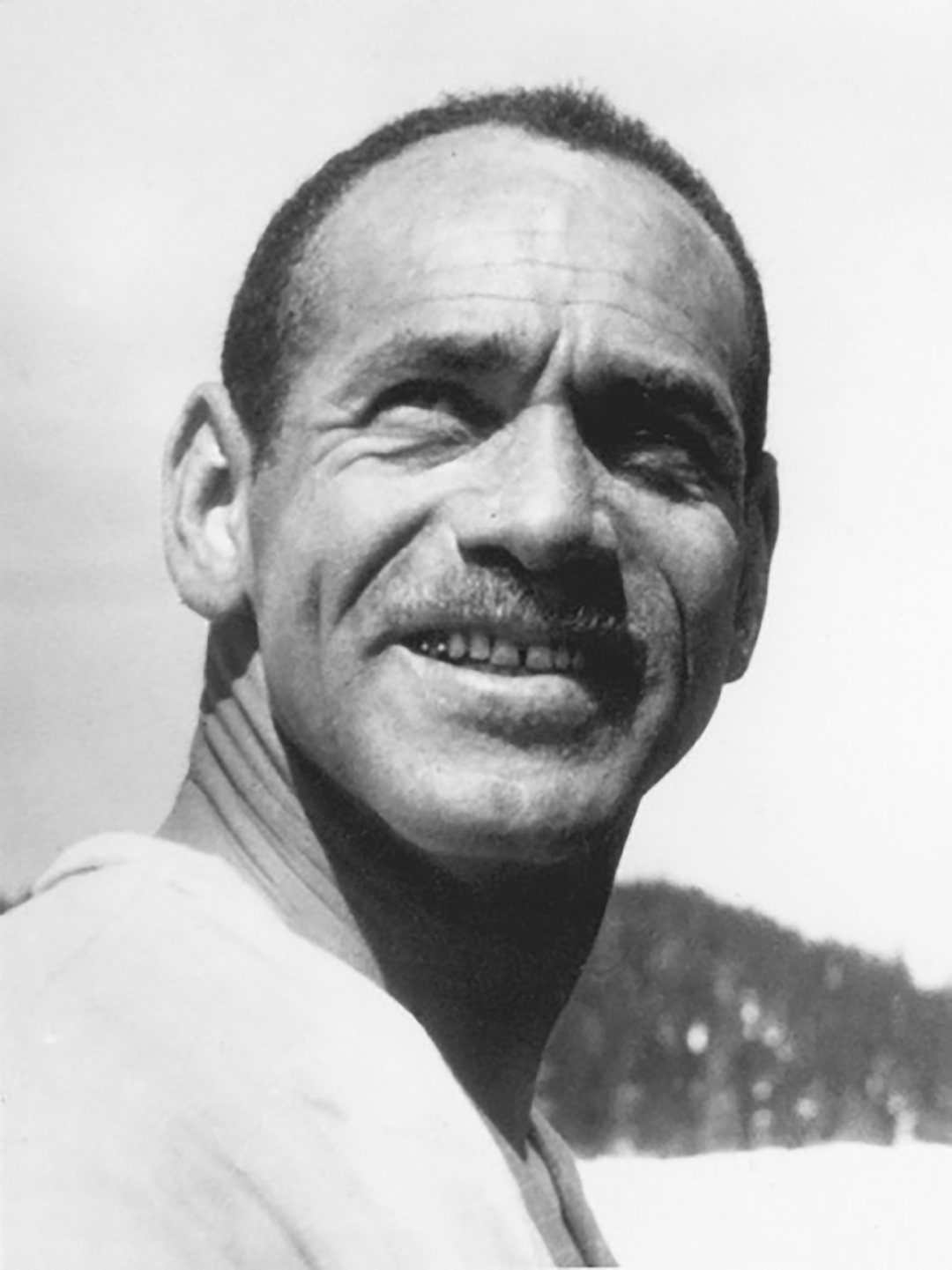
Seven days after the signing of the Civil Rights Act in 1964, Dr. Charles Madison Crenchaw made history as the first Black American to summit Denali, the highest peak in North America. His extraordinary achievement not only marked a milestone in mountaineering but also personified the reaching of Dr. Martin Luther King Jr.’s figurative “mountaintop.” In honor of Black History Month, we invite you to read the incredible story of this historic ascent.
7 minutos leer
Ene 30, 2025
On July 9,1964 Dr. Charles Madison Crenchaw became the first Black American to reach the summit of Mount McKinley, known today as Denali, the highest peak in North America. An avid mountain climber, based in Seattle, Crenchaw’s story of adventure in Alaska directly intersects with the highest ideals of the Civil Rights Movement of the 1960s led by Dr. Martin Luther King Jr. By ascending to the tallest summit in the United States, Crenchaw successfully illustrated the metaphor of King’s dream by literally reaching the mountain Top.

In the years leading up to that historic climb, during World War II, Crenchaw served as a Master Sargent in the U.S. Army Air Corps. As a flight engineer, he was in charge of maintenance for a squadron of airplanes flown by the Tuskegee Airmen(Se abre en una nueva ventana). Members of the 332nd Fighter Group and the 477th Bombardment Group trained at the Tuskegee Institute in Alabama. Their outstanding service under fire demonstrated the ability of Black pilots to perform with distinction as officers and in combat. The Tuskegee Airmen were credited with having flown many successful bomber escort missions over Europe. Performing their duties with valor, this group of fighter pilots never lost a single plane under their protection though several of their number lost their lives.
After his military service Crenchaw attended Morehouse College under the GI Bill. Upon graduation he enrolled in the University of Chicago Graduate School of Engineering where he majored in industrial management. He completed his degree second in his class but was advised by the dean of students that, “being a negro,” he had little chance of getting a position in his chosen field. Undeterred from achieving success, Crenchaw persisted and after working several jobs for which he was overqualified, he landed a position at the Boeing Aircraft Company in Seattle where he worked in quality control for several key components of the Apollo space program.
While living in the Pacific Northwest, Crenchaw developed an interest in climbing. In 1961, he joined the Seattle Mountaineers(Se abre en una nueva ventana) and became an amateur outdoorsman. In 1963 he was one of the first climbers to be invited by team leader Alvin E. Randall to be part of an expedition the following year to climb Denali via a route along Karsten’s Ridge.

As an aspiring climber, Crenchaw was profiled in the September 1963 issue of Ebony Magazine. By sheer coincidence that same edition featured the historic March on Washington for Jobs and Freedom just a month earlier. Ironically, it was during this event in Washington D.C. on the steps of the Lincoln Memorial that Dr. Martin Luther King Jr. defined his vision of social progress for Black Americans. In the “I have a dream” speech, King illuded to the metaphorical ascension of high mountains.
“From every mountainside, let freedom ring,” King said. “And if America is to be a great nation this must become true.”
Less than a year later, on June 15, 1964, Crenchaw arrived by train at McKinley Park Station. Alongside a team of 18 climbers, he traveled by bus over 80 miles to a camp near Wonder Lake overlooking the Thorofare River. Over the following days, the group hiked across the challenging terrain of the Muldrow Glacier, carrying backpacks weighing 80 to 90 pounds, until they reached McGonagall Pass.
On June 24, team leader Al Randall attempted to navigate the treacherous Great Ice Falls. As they entered the area, a massive serac weighing an estimated 10 tons broke loose, triggering an avalanche that narrowly missed the other climbers.
"The mountain was nipping at us," Crenchaw later reflected in his expedition report for the American Alpine Journal. Not long after, a 15-foot-wide crevasse suddenly opened, nearly trapping the team.

The glacier’s instability and frequent whiteouts made the climb harrowing. On June 28, the team was jolted awake by an earthquake. As they ascended Karsten’s Ridge to Brown’s Tower at 14,600 feet, they narrowly escaped another avalanche. That same day, Randall saved himself from a fatal 3,500-foot fall by using his shovel to self-arrest after slipping on a cornice at 11,800 feet. Despite these challenges, the team established Camp V at 12,500 feet.
With Camp VI set at 15,500 feet and a high camp at 17,700 feet, they prepared for the summit. On July 9, in clear skies and light winds, they successfully ascended to the summit of Denali.
"It had been so easy today," Crenchaw wrote, "that it was hard for climbers to realize they were standing on the highest point in North America. Climbers found themselves searching through the clouds for something yet higher."
It just so happens that Crenchaw reached the summit of Denali just seven days after the signing of the Civil Rights Act of 1964 on July 2.
As Dr. King looked over the shoulder of President Lyndon Johnson and watched his signature, the team was camped on Karsten’s Ridge. Looking back on this history, today we can truly appreciate the magnitude of this event. Through his actions Crenchaw made King’s mountain metaphor a reality. As a part of an integrated team of climbers, in a demonstration of his character as a talented alpinist, Crenchaw personified the vision of a world in which everyone can pursue their own expression of freedom, and the dream came true. He indeed reached the mountain top.

About the Author
James Edward Mills(Se abre en una nueva ventana) is a freelance journalist, educator, National Geographic Explorer and Osprey Ambassador (Se abre en una nueva ventana)who tells stories about outdoor recreation and environmental conservation.

Video player
Cargando...
Your Cart ()
No tienes ningún artículo en tu carrito.
You may also like
Subtotal:
Subtotal after discount:
Cargando...