
Search is currently unavailable. To use search functionality, please accept cookies in your preferences.
Are You Ready to Start Splitboarding?
No lifts, no lines, no lodge hot chocolate. A distinct adventure comes with special considerations.
13 minutos leer
Taylor McKenzie Gerlach
Nov 21, 2025
If you’re anything like my family in North Carolina, splitboarding might be a foreign concept. I get it; the idea of snowboarding…uphill…doesn’t initially compute. Enter GoPro videos sent across the continent aiming to educate: metal buckles that release my board into two ski-like planks, the way I stick mohair strips to the base of those and click boots into tiny bindings to travel uphill. The jury is still out on whether or not they really get how it works, but regardless of how I get out there, we can all ooh and ahh over the stunning views and quiet panoramas that splitboarding affords.
To get into the nitty gritty, splitboarding is a snowboarder’s version of backcountry skiing, or touring. A splitboard looks like a snowboard on first glance, but it can snap apart into two planks for gliding uphill. Skins—sticky strips of felt-like mohair and nylon—attach to the underside of the planks, gliding up but catching on friction to avoid slipping back down the slope. To ride downhill, the skins come off and the planks snap back together into a board. The upshot of all of this snapping and sticking is adventure beyond designated runs. It’s sunrises on glaciers, Jetboil coffee on a quiet ridgeline, and whooping with friends weaving through deep powder in the trees.

If you’re a snowboarder curious about the wide world of backcountry splitboarding, you’ve made it to the right spot. When should you make the jump from shredding resort laps to splitboarding? There’s no magic formula for zero risk and max fun, but the following questions can help you decide if you’re ready to start splitboarding.
Do you enjoy walking uphill?
Without a lift to swiftly deposit you at the top of a well-marked run, you’re in charge of gaining elevation by your own power. By the clock, you’ll spend most of your time splitboarding going uphill. Splitboarding is certainly more about the journey than the destination. Sure, sweet turns on untouched powder are glorious perks; but you’ll have a better time if you enjoy the way up there too. How do you feel about hiking or snowshoeing? Splitboarding is pretty similar—with the added bonus of a quick, thrilling ride down.
If you’re not so sure, start slow and spend time training your body on hikes with increasing elevation gain. Or if the uphills still feel like a slog, find ways to make them more fun.

I like to bring a camera along, even if it’s just my phone, to remind myself to take in the views along the way. Plus, short photo pit stops break up the uphill sections. The scenery will fly by on the way down, so the way up feels like a special opportunity to soak it all in and notice details I’d otherwise miss. Another hack to get myself through long tours? Candy in my pocket. Stay away from chocolate unless you want a body-heat-induced melted mess, but gummy bears, sour worms, and sugary little treats are a lifesaver. One more switchback and I’ll get another worm…Four worms at the top of this ridge. You get the idea.
Do you have avalanche and snow science knowledge?
Snowboarding in general carries risk. Snowboarding outside of controlled avalanche areas (shoutout to ski patrols who identify and mitigate risks inbounds!) is even more risky. Without the knowledgeable mountain safety directors and bomb-throwing ski patrollers of a resort, backcountry terrain requires all recreators to share the burden of recreating safely and responsibly. Do you know how to access and read an avalanche forecast? Can you identify and avoid high-risk areas? Do you recognize signs of instability? If an avalanche did occur, do you know how to safely rescue people around you? The knowledge base required to responsibly splitboard is vast; learning continues throughout a spliboarders’ lifetime.

If you can’t give a confident, resounding yes to the questions above—or just want to brush up on continued education—local avalanche centers(Se abre en una nueva ventana) are a great place to start for intro awareness classes, forecasts, crowdsourced observations, and educational workshops. U.S. nonprofit AIARE(Se abre en una nueva ventana) and Canada’s AST(Se abre en una nueva ventana) courses teach students rescue techniques and terrain management skills. Formal education is only a first step, though; practice is paramount.
The instructors in my AIARE course dug a snow pit to demonstrate the layers of our snowpack; we split into groups to practice locating buried beacons. We looked at the terrain around us on various mapping applications to determine a low-risk route for each day and learned how to execute tight switchback turns on a skintrack. I had chosen an all-women course through nonprofit SheJumps, which aims to course correct the historic exclusion of women—and specifically Black, Indigenous, and women of color—to outdoor spaces like splitboarding. Equally as important as the hard skills we learned throughout the weekend, we shared our questions, our fears, and our experiences being overlooked or undervalued in the outdoors, cementing lasting connections among newly minted backcountry partners.
Do you have backcountry buddies?
Unlike riding lifts to groomers, splitboarding is a team sport thanks to the inherent risks of traveling in avalanche terrain. Do you have friends who backcountry ski or splitboard already? Do you trust their risk assessment and decision making skills? Would anyone be willing to act as a mentor while you practice your new snow safety skills?

Local avalanche centers and those avalanche education courses come back into play here; if you’re low on backcountry connections, many have year-round events and workshops ripe with new partner potential. Or volunteer and meet the whole crew behind your area’s avalanche forecasting! Local chapters of outdoor affinity groups like SheJumps, Queer Mountaineers, BIPOC Mountain Collective, and Latino Outdoors are also comfortable spaces to make connections for historically underrepresented communities.
Two years after first meeting in our AIARE course, a fellow splitboarder friend and I spent two days in Canada’s Whistler backcountry, riding glaciers and snowfields to stay the night in a remote hut. Ripping skins off to ride spring snow, we reminisced on meeting as baby backcountry splitboarders, thankful that the course brought us together.
Are you confident riding unpredictable terrain?
Sure, you can find low-angle, beginner-friendly backcountry areas, but conditions can shift quickly with visibility and wind turning a gentle slope into a whiteout obstacle course. Even if you have a mellow plan, a wrong turn can drop you in tight trees or unexpected cliffs; feeling competent riding in various terrain and weather conditions stacks the odds in your favor.
Thankfully, practical riding skills and confidence can be honed in a resort. Perhaps an equally as important skill, you can practice planning routes on terrain well within your comfort zone, and identifying safe bail options. Remember that areas that may be an easy hike in the summer can be very different with winter’s avalanche and weather considerations. Checking recent trip reports and crowdsourcing beginner-friendly routes can help create a realistic expectation of your objective.

Case in point, the year after I first climbed Mount Baker, I returned with my splitboard to ride the glaciated peak. I had already travelled this route on foot the year prior and researched recent reports for the current season’s snowpack and crevasse conditions. But when I reached the final steep headwall less than 1,000 feet before the summit, my confidence faltered. If I wanted to ride from the top, I’d have to traverse hundreds of vertical feet of steep, icy terrain, with wide crevasses waiting in the fall line if I were to slip up. Tiredness weighed down my legs from the skin up, and I chose to take my board off, walking down that section with an ice axe in hand. Thanks to my backup plan, the rest of the day was an enjoyable, not-too-stressful descent, and I can continue to build my confidence riding steep terrain in high exposure before returning.
Are you ready to invest money in new gear?
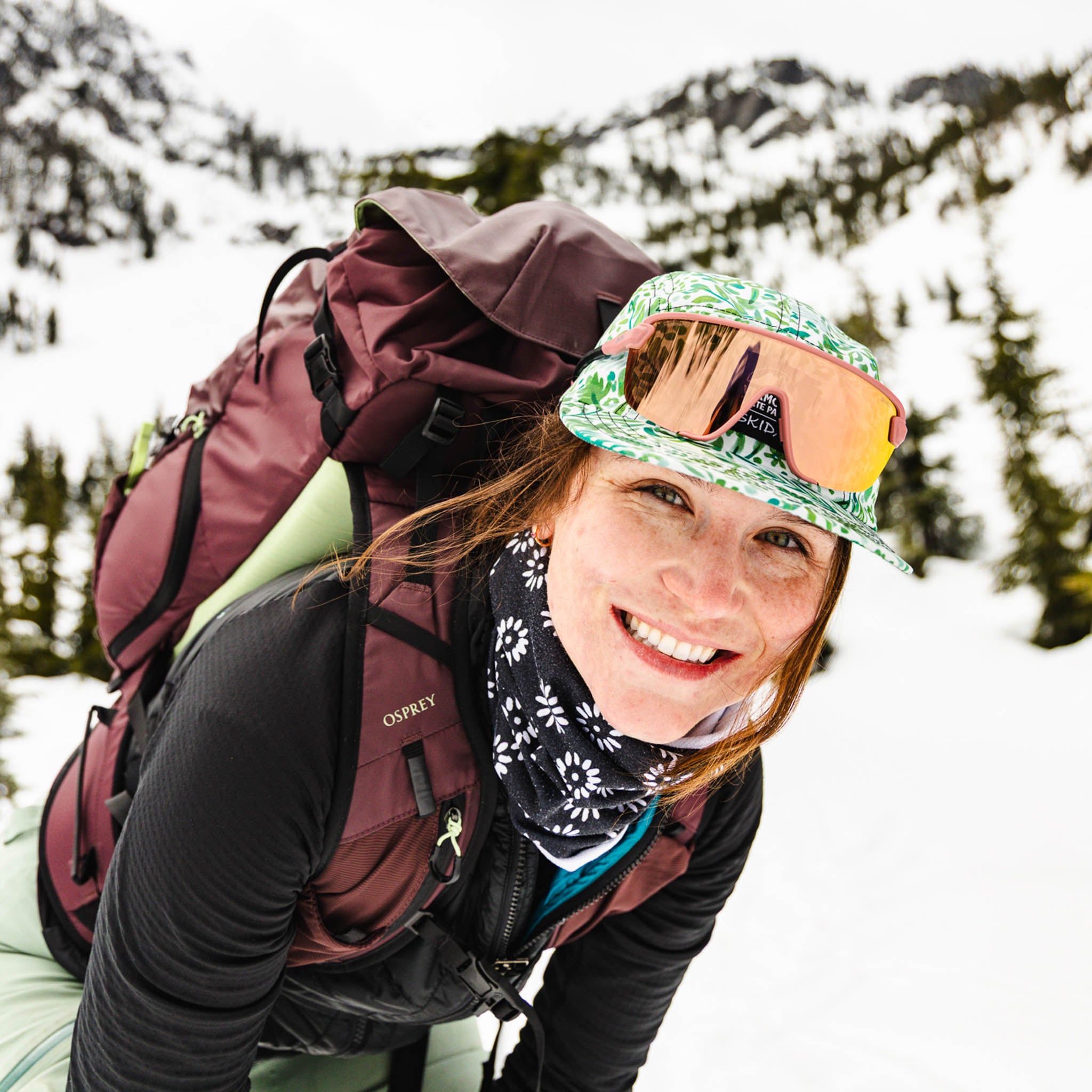
Splitboarding brings a slew of non-negotiable gear, and it’s not cheap. Some items—like a resort helmet and boots—can do double duty, but you’ll need a new board, skins, bindings, and poles. More importantly, you’ll need the trifecta of avalanche safety tools: an avalanche transceiver, a snow shovel, and a probe…and a backpack with a dedicated storage pouch for quick access like Osprey’s Firn packs. Plus, you’ll need to source the 10 Essentials(Se abre en una nueva ventana), imperative to call for help and survive until it arrives. I tote all those goodies in a Firn 28, roomy enough for longer day trips where I might want a bunch of snacks and layers on top of the non-negotiables.

If you’re not ready to fully break the bank, some things—aside from a helmet and avalanche transceiver—can be purchased used. Or try borrowing or renting gear until you’re ready to invest in your own. Several big box retail stores and local guiding outfits rent splitboards. Many cities have gear libraries, which are often tied to outdoorsy social clubs and nonprofits teeming with potential backcountry buds.
My very first snowboard was a Facebook Marketplace purchase; I frequent my local used gear shop in search of hidden gems…and my overflowing gear closet shows it. I’ve also rented snowshoes from a gear library in Seattle, which spotlights the gear middleground for soon-to-be splitboarders. Some riders choose to invest in avalanche and safety gear first, then use snowshoes to get uphill (with their snowboard strapped to their backpack) until they’re ready to spring for a splitboard. The path isn’t important, having safe, well-fitting gear—and knowing how to use it—is what matters.
Photo Credit: Taylor McKenzie Gerlach
Video player
Cargando...
Mi cesta
Your Cart ()
No tienes ningún artículo en tu carrito.
You may also like
Subtotal:
Subtotal after discount:
Cargando...