
Search is currently unavailable. To use search functionality, please accept cookies in your preferences.
More than a Race
Re-connecting to family and land during the Navajo-led Mountain Sheep Canyon race, with Osprey Ambassador Colleen Cooley.
10 minutos leer
Mayo 15, 2026
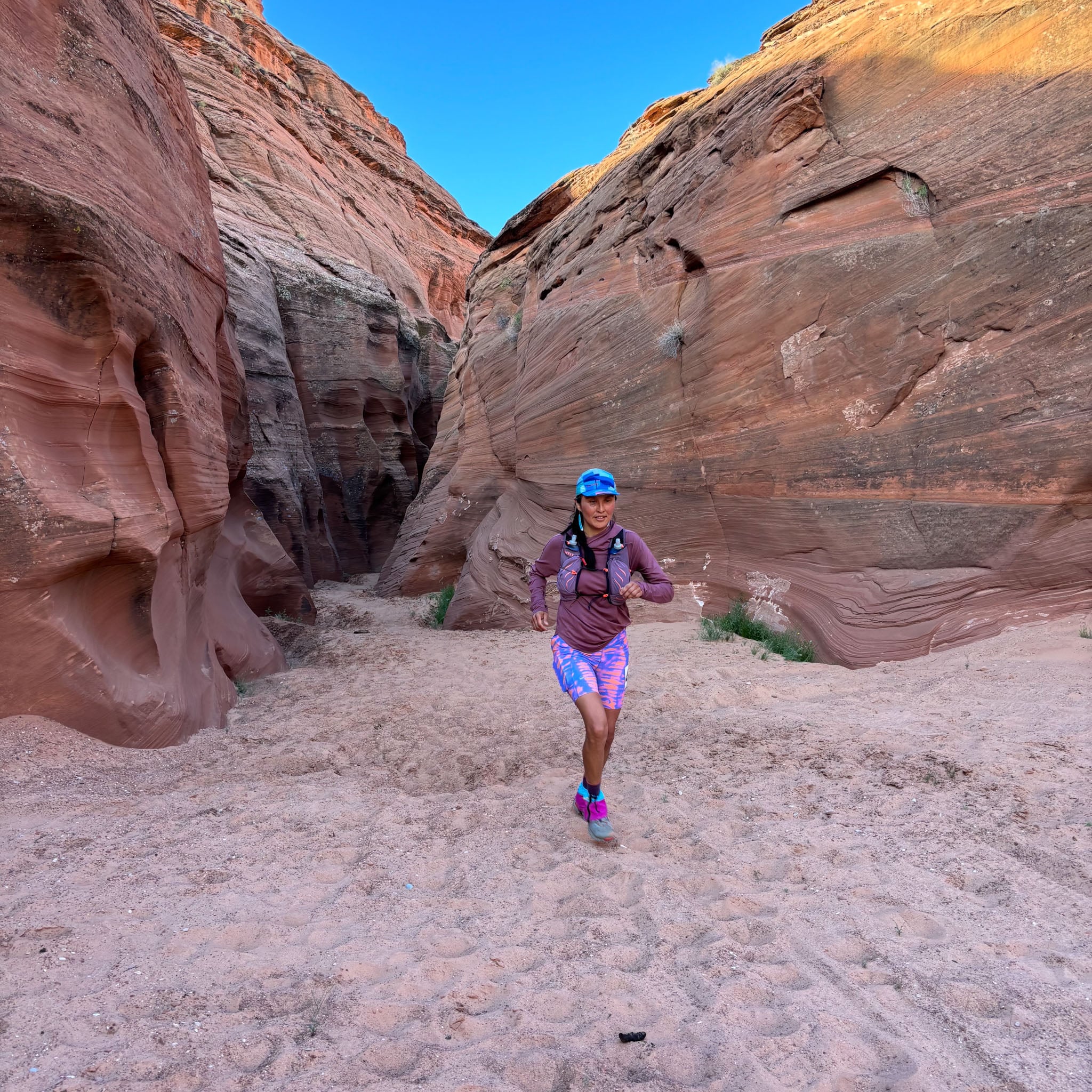
While many runners who attempt the various distances of the Antelope CanyonX and Mountain Sheep Canyon races comment on the difficulty of running on the fine, pink sand that blankets the vast landscape, I embraced it. Probably because I grew up wandering the washes and sandstones in Shą́ą́'tóhí (Sunshine Springs), located one hour east of Page, Arizona which is portrayed by the same fine, pink sand that can make its way through the tiniest of holes in your shoes. So, for me, it’s nostalgic.
The sand is only one aspect of the race that I enjoyed. Organized by Diné ultrarunner and race director Harold Benally(Se abre en una nueva ventana) of Moccasin Running and hosted by Diné owned tour operators Tadidiin Tours(Se abre en una nueva ventana) and Black Streak Canyon Tours(Se abre en una nueva ventana), these races bring together relatives from near and far, and essentially, it feels like one big family reunion. Runners are greeted with a beautiful sunrise, followed by a prayer and a water/land blessing by Harold himself. This is exactly what I experienced during the Antelope CanyonX half marathon in 2024 and the reason why I wanted to return – to experience a race that is intimate and meaningful. This time around, I signed up for the 10-mile Mountain Sheep Canyon race, which takes you through an upper section of the well visited Antelope Canyon.
Two days prior to the race, my partner (who also signed up for the race) and I began our journey north. We drove from our home in the Sonoran Desert where the mesquites are flourishing, the ocotillos and palo verdes are lighting up the desert, and the creosote are leaving a trail of a sweet aroma to the high desert of Flagstaff, where visible pockets of snow remain atop Dook’o’oosłííd (San Francisco Peaks). My heart and mind were filled with excitement, anticipation, and comfort. Excitement to see everyone. Anticipation to experience a new section of Antelope Canyon. Comfort in knowing that I would be surrounded by family, friends, and volunteers.
Come race day, it all seemed to go by so quickly. With only five hours of sleep and a 4:30am wakeup call to disassemble our tent, I did not quite feel ready. But, when we arrived to the Black Streak Canyon Tours parking lot to check-in and pick up our race bibs, I could hear the familiar voices of friends that also traveled from southeast Arizona to volunteer and participate in the race. As I continued to prepare for the race – packing my running vest with a few essentials (water, a few snacks, and a bandana), securing my race bib to my shorts, and helping my partner with his bib too (have you seen how tiny the safety pins are?) – I began to feel more at ease, hearing the laughter and excitement of other runners and reminding myself, “This is why you are here. To reconnect to family, to land, and to my ancestors.”
As runners continued to arrive, check-in, and take one last visit to the porta-potty, Harold provided periodic announcements throughout the early morning. The minutes flew by and, suddenly, the countdown was upon us. “10, 9 … 5, 4 … go” and we were off! We immediately found ourselves trudging through the fine, pink sand, wind blowing in our faces, and an unpleasant view of the massive transmission lines overhead. These transmission lines are a result of the former Navajo Generating Station that supplied power to the Central Arizona Project and to cities in Arizona, Nevada, and California for over 40 years. A longer, complicated history exists with the beginnings and ends of this mega power plant. While it impacted the health of the land, water, and several communities on the Navajo Nation, it also generated revenue and jobs for many Diné families including my own; my father worked in both coal mines located atop Black Mesa for more than 30 years. Today, organizations like Tó Nizhóní Ání(Se abre en una nueva ventana) are advocating for the protection of water from industry use and bringing power back to Diné communities that have been impacted by coal while positioning communities to transition away from fossil fuels toward renewable energy.
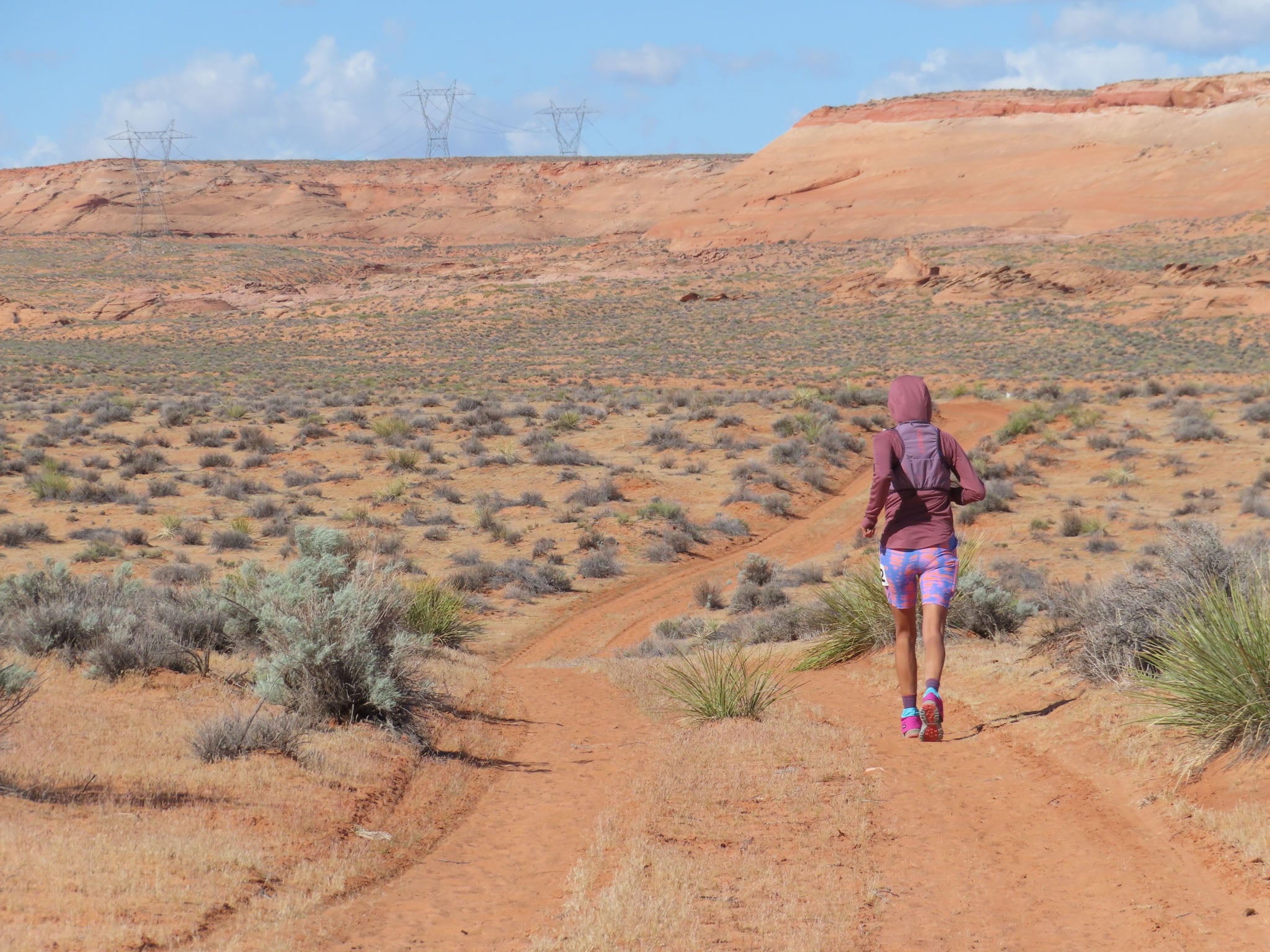
Back to the race. My intentions were simple: to connect, to enjoy, and to take in the beauty of the landscape. Indeed, I felt connected to the land and to the people. I took in every moment of the landscape, including every grain of sand, every bloom of yucca and cliffrose, and every layer of sandstone. While I thoroughly enjoyed every aspect of the race, once I was in it, I decided to challenge myself to keep a steady pace, to stay within sight of the runners ahead of me, and to work on my breathing. Normally, I am not able to breathe very well during my runs, mostly due to allergies, but on race day, it was surprisingly normal. Thank goodness.
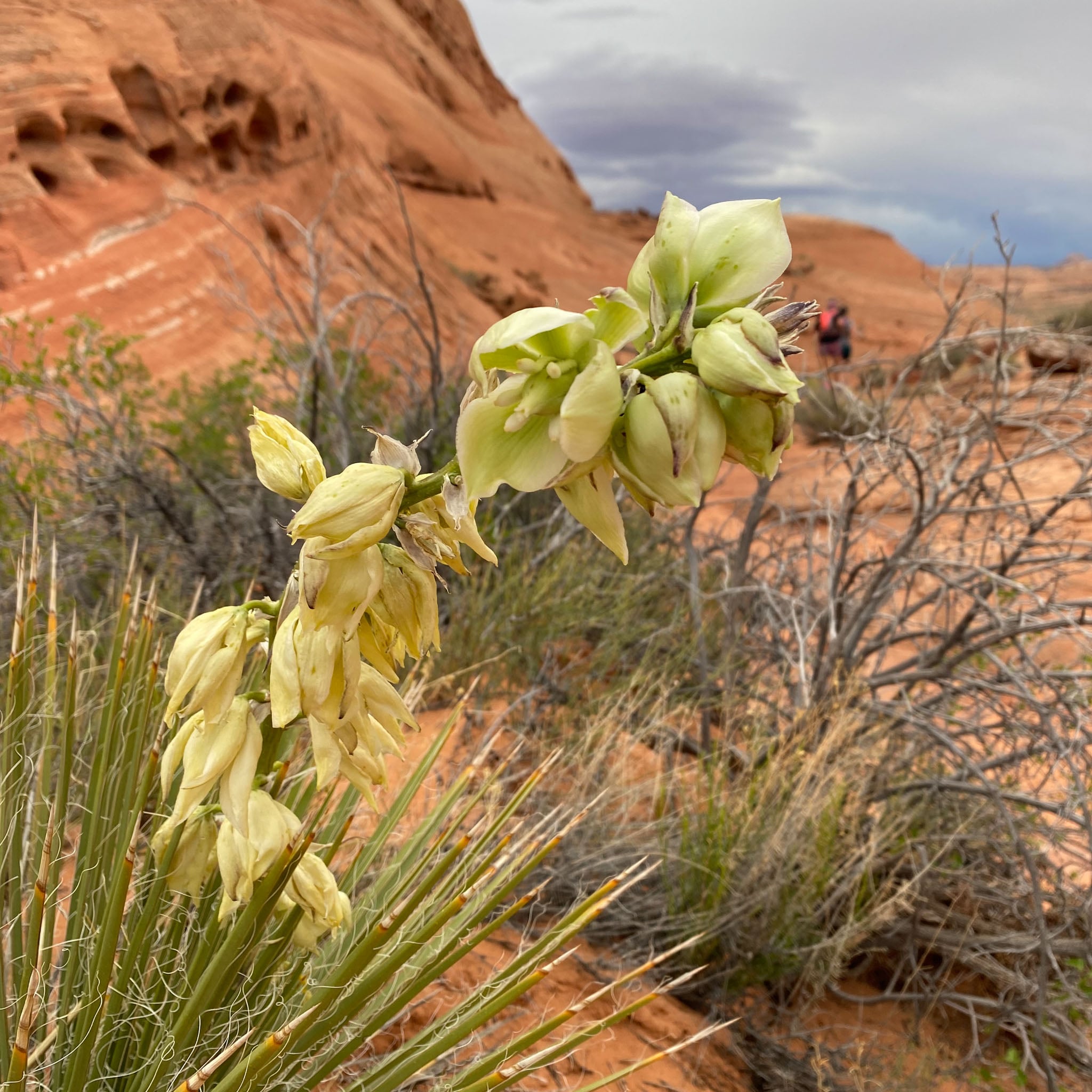
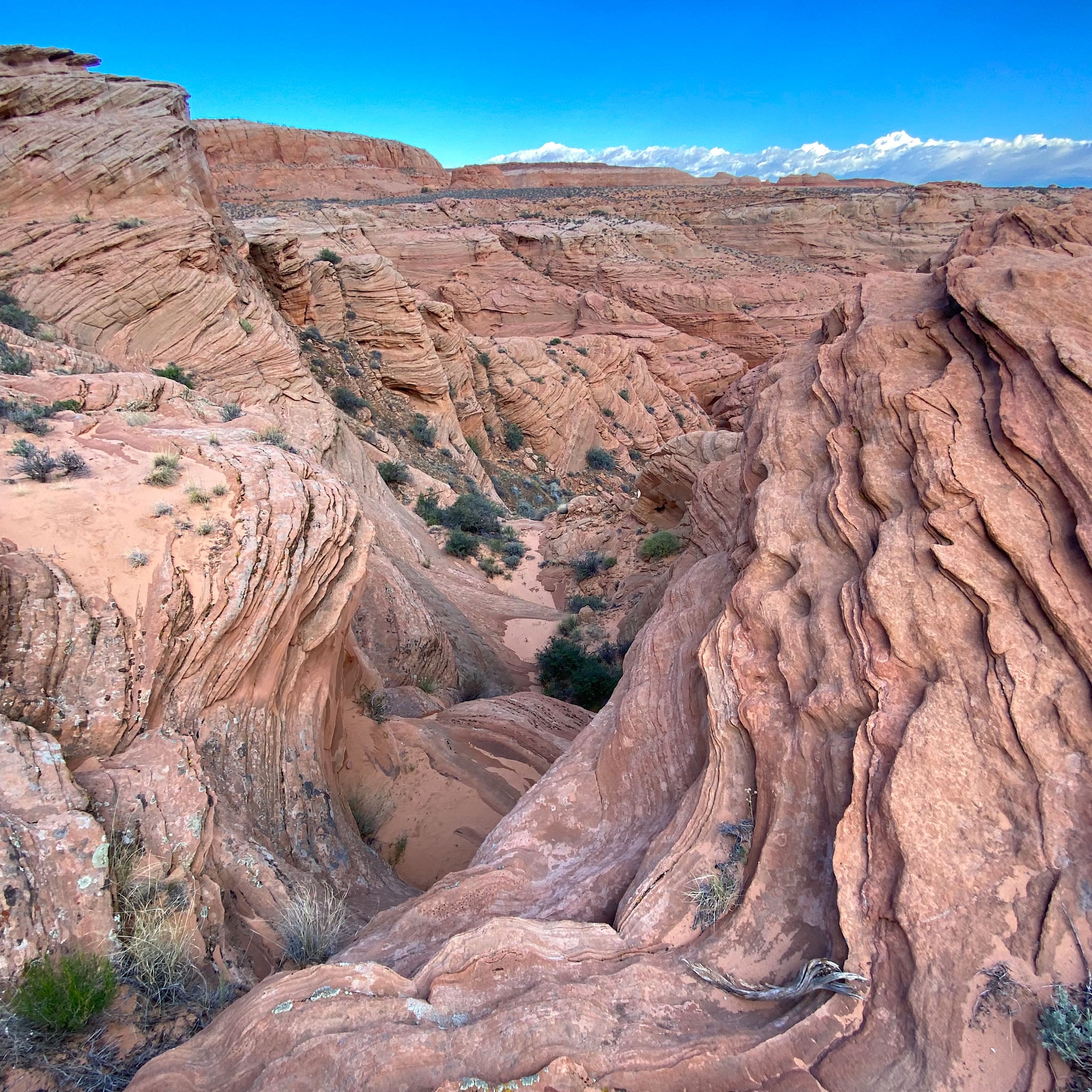
Around mile seven, I was eagerly anticipating and wondering when we would enter Mountain Sheep Canyon. A few miles later, there it was and there I was, overlooking a canyon that took millions of years to form into a natural wonder. I paused for a moment and contemplated what this place might have looked like before sand dunes turned into rock. It was a steep descent into the canyon, with a few switchbacks before scrambling through a drainage and meeting a fork in the canyon. “Which way do I go?” I had no clue. There were footsteps veering left and more footsteps to the right, so I stopped and waited for the runner behind me to catch up. She also scouted the fork in the canyon before a volunteer shouted, “This way!” We happily continued through a narrow section, in awe of the geologic patterns that embody this part of the canyon.
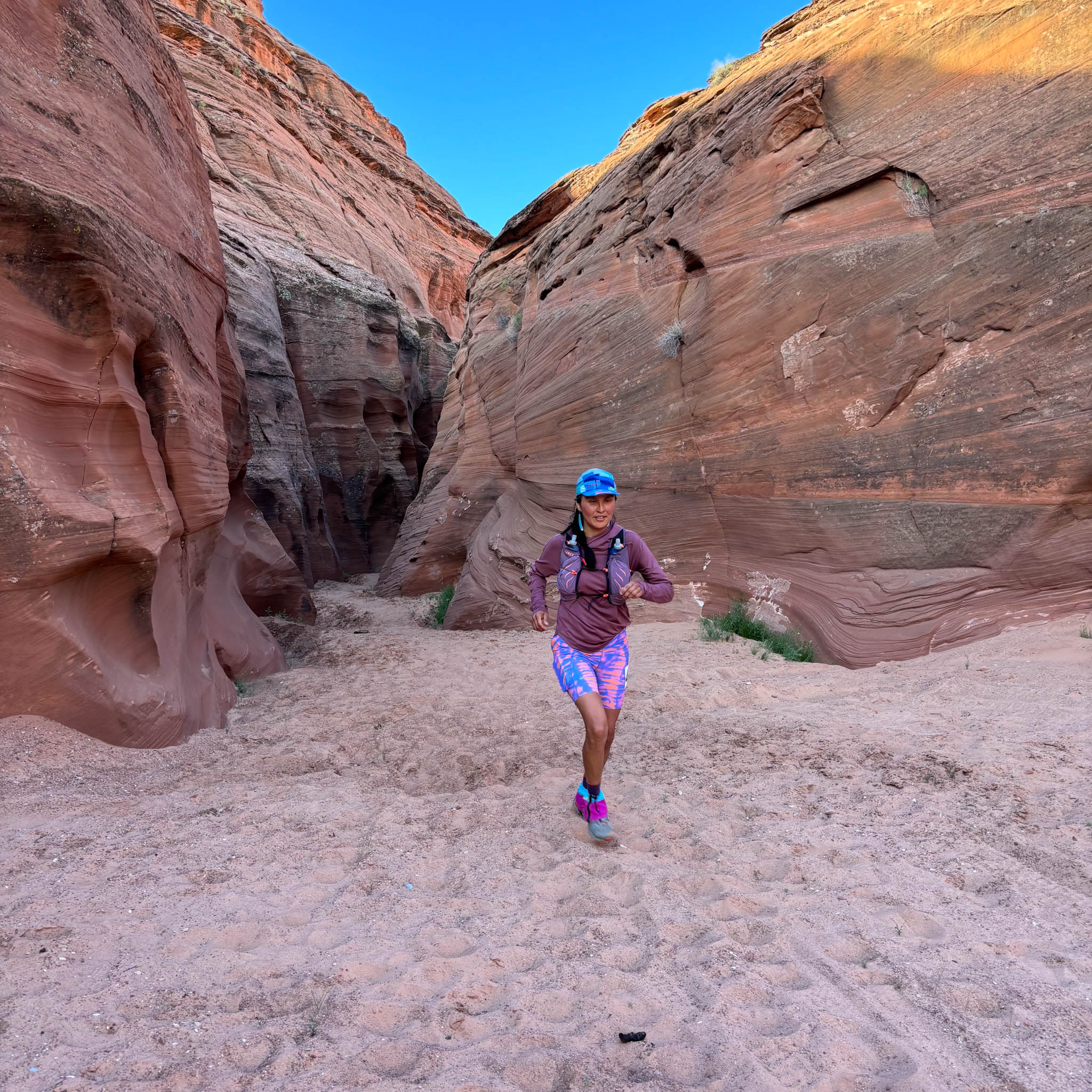
Once out of the canyon, and for the next two miles, it was all sand – and I mean, all sand. My focus turned to placing one foot in front of the other, step by step, breathing in, breathing out, and continuing to push my body. And to my surprise, I placed first in my age category and ninth overall. It was all cheers and smiles as I crossed the finished line. My partner gave me a big hug, Harold handed me a bracelet, and friends shared words of “congratulations” and “good job.” For the next hour or so, more runners crossed the finish line with sighs of relief, smiles, and a sense of accomplishment. I know the feeling. It’s how I felt when I ran my first in-person race, a half marathon on the Arizona trail outside of Tucson.
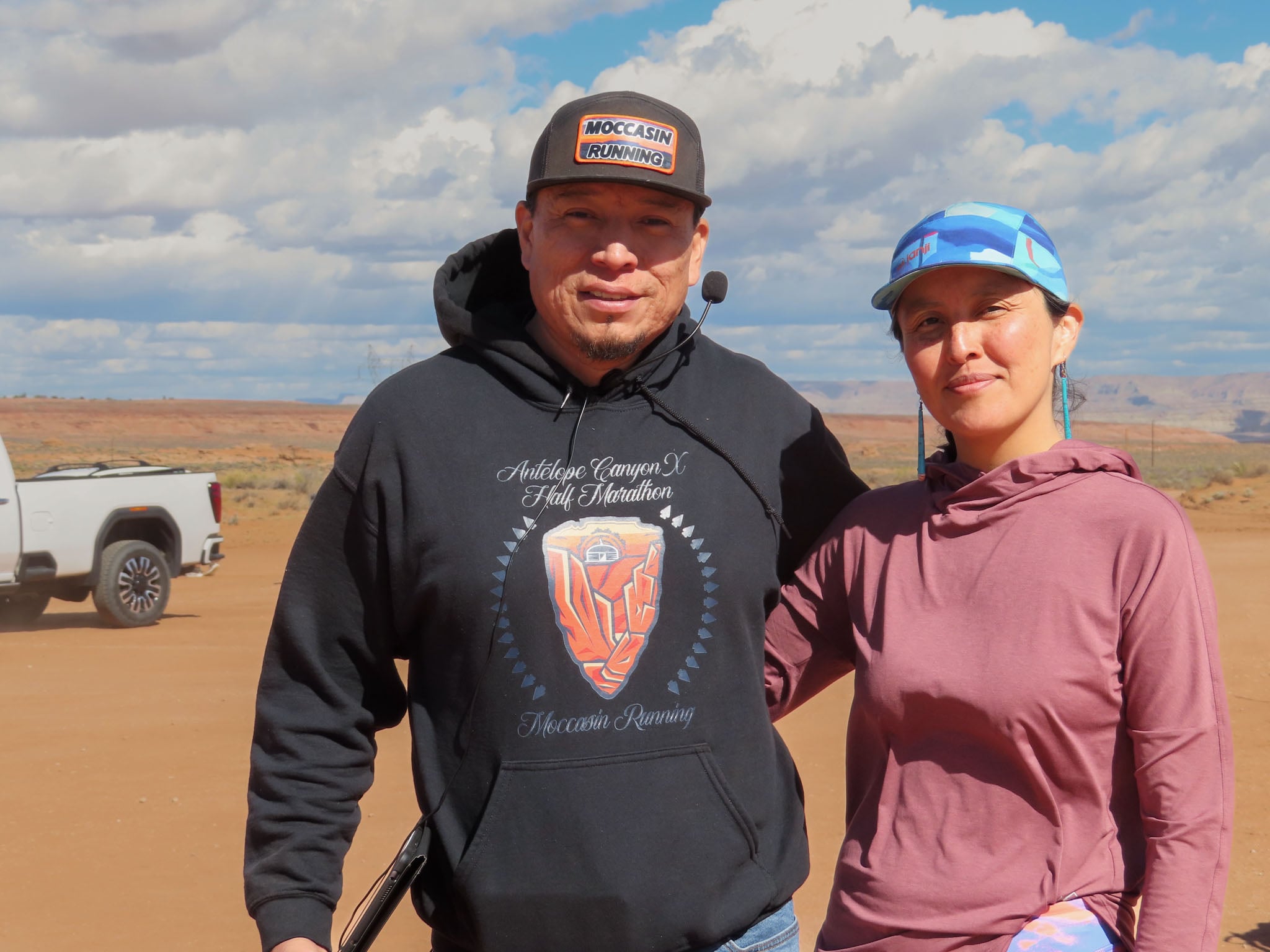
Gratitude to Harold, Black Streak Canyon Tours and all the volunteers for hosting this year’s Mountain Sheep Canyon race.
Video player
Cargando...
Mi cesta
Your Cart ()
No tienes ningún artículo en tu carrito.
You may also like
Subtotal:
Subtotal after discount:
Cargando...