
Search is currently unavailable. To use search functionality, please accept cookies in your preferences.
Healing and Caretaking the Watersheds of the Bears Ears Region
Traditional Ecological Knowledge in collaboration with western science guide the largest watershed restoration project in the history of the Manti-La Sal National Forest.
13 minutos leer
Bears Ears Partnership
Oct 13, 2025
One morning in June, the sun catches a trickle of water winding its way between swaying aspens and gambel oak in southeastern Utah’s Abajo Mountains.
In a meadow clearing nearby, the peal of a chainsaw rips through the thin mountain air, momentarily silencing a determined woodpecker. Gloved hands hoist the newly bucked log – now the right length to serve as an exclosure railing – to be attached with rebar to another.
It was another busy day out in the field for the Canyon Country Youth Corps(Se abre en una nueva ventana) (CCYC), a crew of young adults trained and managed by Bears Ears Partnership(Se abre en una nueva ventana) to complete conservation projects in the Four Corners region in partnership with regional land management agencies. With direction from US Department of Agriculture, Forest Service range specialists, these crews were constructing a fence to help restore a stream in the Manti-La Sal National Forest.
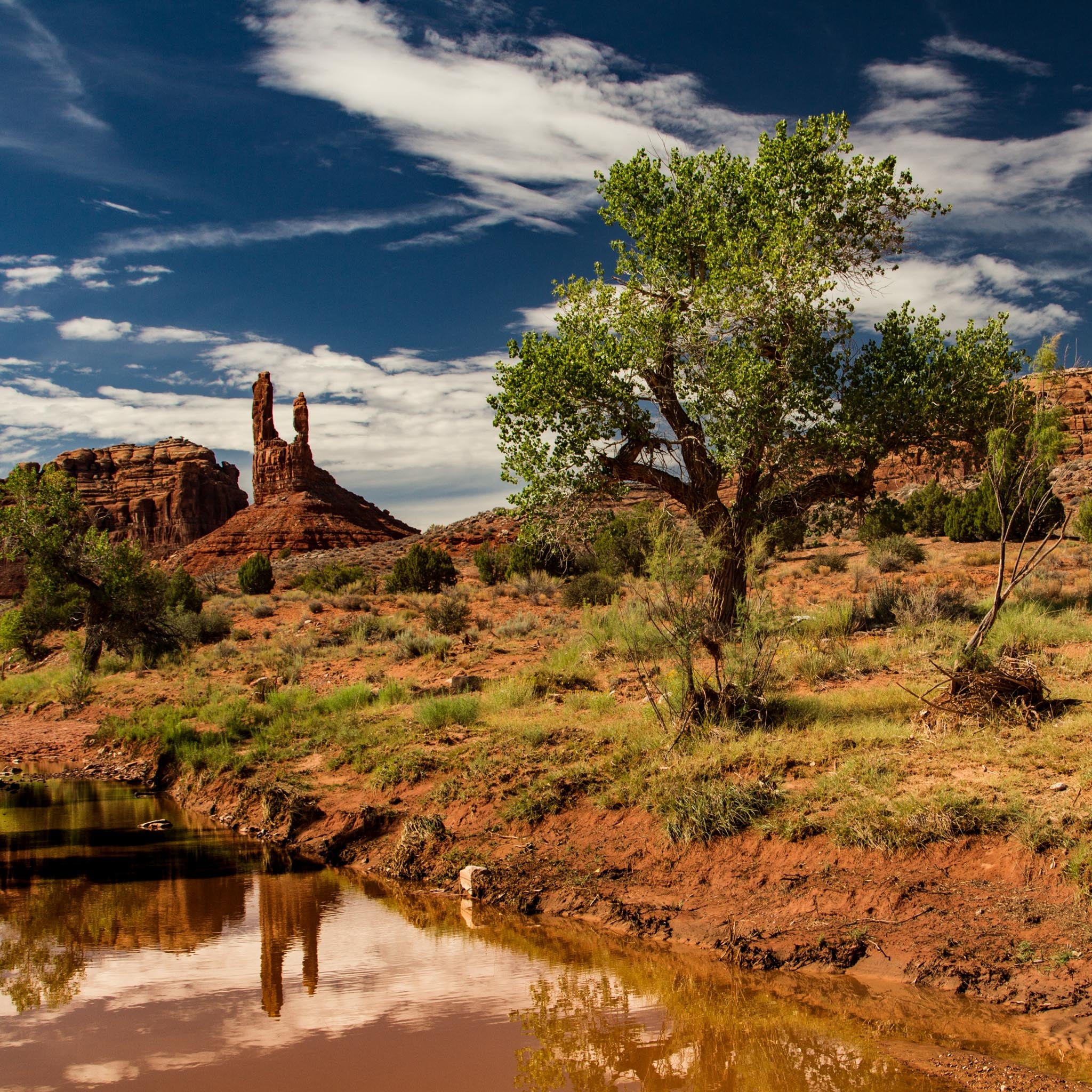
Watershed restoration can be a complex – but deeply rewarding – task. This section of the 1.4 million-acre National Forest, part of the upper basin of the Colorado River, is managed for multiple uses, including range, timber, wildlife, and recreation. While humble, many of the streams in these Abajo Mountains will find their way to louder streams that will eventually tumble down several thousand feet of elevation to reach the San Juan River, whose muddy coils form the southern boundary of the Bears Ears National Monument. From there, the tributary will widen into the gushing Colorado River on its western journey.

The meadow near the stream had become channelized due to the common practice of placing water developments for cattle near meadows and streams. Rather than the wet meadow it should be, hooves in the saturated soils had created an incised channel with hummocking. The buck and rail fence being installed by CCYC crews is designed to be wildlife-friendly, letting native species like deer, elk, and turkey easily pass through while keeping cattle out.
After removing the old infrastructure, the crews built a trough to ensure that cattle will have improved access to clean and consistent water, supporting ranchers while protecting the sensitive riparian area.
“If you can help this tiny creek in the middle of the watershed, the positive impact can spread across hundreds of acres of riparian zone downstream,” says Kyle Leihsing, Canyon Country Youth Corps Manager.
About half of CCYC crew members are Indigenous – yet for many of them, these hitches provide some of their first extended time spent on their ancestral lands.
This collaboration between the Forest Service and CCYC is just one example of the type of ongoing partnership and vital on-the-ground conservation this landscape depends on to thrive.

Since 2024, an initiative called the Bears Ears Conservation Partnership (BECP) has coordinated Tribes, federal and state agencies, NGOs like Bears Ears Partnership, and local communities to heal and caretake the watersheds of the Bears Ears region. Guided by expertise in the latest science, Forest Service specialists direct the CCYC crews to implement best practices in land management.
These efforts – and other similar projects from several participating partners – make up the early stages of what will be the largest watershed restoration project in the history of the Manti-La Sal National Forest.
A New Era for Conservation
The BECP is one of many efforts working to implement the groundbreaking Resource Management Plan(Se abre en una nueva ventana) of the Bears Ears National Monument – prioritizing Traditional Indigenous Knowledge alongside western science and multiple uses in watershed restoration – and protect the surrounding landscape.
Spanning more than a million acres, the Bears Ears region is a living landscape containing immense cultural, archaeological, and ecological significance. Steered by co-management between Tribes and agencies, this historic Resource Management Plan establishes a visionary model that can inspire a new era of conservation and land management across all public lands.
“As Diné, we understand that Tó éí ííná - water is life. Our relationship with water is not just physical, it is spiritual, cultural, and ancestral,” says Davina Smith, a Bears Ears Partnership Board Member and Independent Consulting Organizer and Tribal Coordinator to National Parks Conservation Association.

“BECP’s model of collaboration is significant because it centers Indigenous leadership and knowledge in a way that reflects the interconnectedness of all things,” she says. “It recognizes that true conservation must include those who have lived in harmony with this land and water since time immemorial. Our traditional ecological knowledge isn’t a supplement; it’s a guide for restoring balance.”
“In the Bears Ears region, water is scarce yet essential to all life. Ask anyone that has spent time in this region what the most important, defining feature of this landscape is, and odds are, they will say water (or the lack thereof),” explains Alix Pfennigwerth, Utah Riparian Restoration Project Manager with The Nature Conservancy. One of the NGOs helping to lead BECP, The Nature Conservancy has been working closely with the Bureau of Land Management to restore streams and riparian areas throughout southeast Utah, including the Bears Ears region. “Every drop of water matters here—and with climate change and the ongoing decades-long regional drought, every drop matters that much more.”
“To match the true scale of the problem, we need to be working at the watershed scale. And to work at that scale, we have to work across boundaries – across federal, state, private, and Tribal lands, and with all agency, Tribal, and NGO partners at the table and actively participating,” continues Pfennigwerth. “The BECP has been a space to bring those partners together in the greater Bears Ears region. Working with BECP has pushed me to think more about what’s going on upstream, downstream, and around our projects, how our work fits into the bigger picture, and how we can work together to scale up our work.”
The profound cultural and ecological significance of water is woven into the directives of the Resource Management Plan, which identifies the San Juan River as “One of the four sacred rivers that Tribal Nations believe were established by the gods to act as defensive guardians over their ancestral lands. [T]he river is closely tied to traditional stories of creation, danger, protection, and healing.”

The river and its corridor provides habitat for hundreds of animals, including two endangered fish species (the Colorado pikeminnow, the largest minnow in North America, and the razorback sucker), the endangered southwestern willow flycatcher, and the threatened yellow-billed cuckoo. This water also nourishes hundreds of plant species, some harvested for food, and others gathered for medicinal and ceremonial purposes. Several southwestern Tribes and Pueblos are descendant communities from the peoples who lived in the area since time immemorial, and who passed on knowledge of how and why to caretake the watersheds.
“BECP will be able to hold stories, songs, and prayers that have been carried through generations, and it continues to sustain both our people and the land,” Smith continues. “The BECP initiative is powerful because it doesn’t treat water as a commodity, but as a living relative honoring the sacred responsibility we have to protect it.”
“My hope is that the future of Bears Ears watershed conservation will continue to reflect this deep respect for Indigenous values, where water is protected not just for human use, but for its own sake, and for all beings that depend on it,” Smith adds. “When we care for the water, we care for ourselves, our communities, and the generations yet to come. Tó éí iiná át’é — Water is life. When we protect the water, we protect our future, our stories, and the heartbeat of the land itself."

The Land Can’t Wait
They say you never step in the same river twice. While the Bears Ears region faces numerous challenges, many of these uncertainties feel familiar – and what has never changed is our shared commitment to protect this landscape.
As we look ahead, we remember that the Resource Management Plan took nine years to be finalized – a timeline that severely limited opportunities for on-the-ground conservation efforts. Now that the historic plan has at last been released to the public, the land can’t wait for us to act. Bears Ears Partnership recently launched The Land Can’t Wait campaign to highlight the urgency of ongoing stewardship of the landscape’s irreplaceable cultural and natural resources, no matter what threats arise.
This fall, CCYC crews will be back out in the field working closely with the Forest Service and Bureau of Land Management to address other aspects of watershed health: meadow restorations, trail stabilization, invasive species removal, stabilization of headcuts in streams and meadows, and stream restoration projects using Beaver Dam Analogue structures, and Post-Assisted or Postless Log Structures, and more. These efforts will help create long-term resilience to threats including wildfire risk, invasive plants, and drought – while conserving critical water resources for all user groups of this sensitive region.
CCYC’s on-the-ground conservation work, in collaboration with agencies and other partners, is the type of tangible work at the core of The Land Can’t Wait campaign: together with our partners, we have the collaborative vision necessary to ensure the watersheds of Bears Ears flourish and thrive.
Learn how you can get involved in protecting Bears Ears by visiting the Bears Ears Partnership website(Se abre en una nueva ventana), and following us on Instagram(Se abre en una nueva ventana), Facebook(Se abre en una nueva ventana), BlueSky(Se abre en una nueva ventana) and LinkedIn(Se abre en una nueva ventana).

This material is based upon work supported by AmeriCorps under Grant No. 23AFDUT0010009. Opinions or points of view expressed in this document are those of the authors and do not necessarily reflect the official position of, or a position that is endorsed by, AmeriCorps.
Cargando...
Your Cart ()
No tienes ningún artículo en tu carrito.
You may also like
Subtotal:
Subtotal after discount:
Cargando...