
Search is currently unavailable. To use search functionality, please accept cookies in your preferences.
The way you move, the feeling of your pack’s contact with you, how its weight carries on your body—backpack suspension influences your experience of every pack-tivity.
A suspension system connects you to your pack through a combination of harness, hipbelt, backpanel, framesheet, frame and load lifters. Osprey’s industry-leading suspension technologies use innovative designs and materials to deliver the ideal balance of flexibility, ventilation and load support for each pack’s intended use—maximizing comfort, boosting longevity and inspiring confidence.
Osprey Suspension Systems
Osprey Carry Technology: Defined

AirScape™
Close-to-Body Stability
Built for stability and dynamic movement, AirScape keeps the pack’s weight close to body with a mesh-covered foam backpanel that adds cushioning, ventilation and a balanced, secure fit. Variations may include a framesheet or LightWire frame.
Shop Airscape Packs
AirSpeed™
Ultimate Ventilation
Excelling in warm-weather adventures, AirSpeed combines a structure-enhancing LightWire perimeter frame with a suspended mesh trampoline backpanel to maximize airflow, keep you cool and distribute weight evenly.
Shop Airspeed Packs
AntiGravity
Gravity-Defying Carry
AntiGravity takes AirSpeed to the next level by adding a tensioned mesh lumbar that extends into the hipbelt, creating a ventilated and supportive full-mesh wrap that makes the pack feel as if it’s floating.
Shop Antigravity PacksPack Suspension Glossary
Backpanel
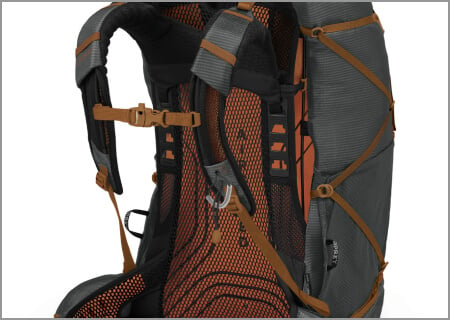
This is the contact point between any pack and your back. Whether close-to-body or airy and separated, it determines how pressure is distributed and influences stability and ventilation.
Framesheet
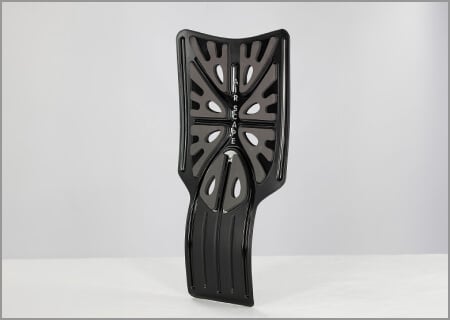
Not every pack has or needs a framesheet; these reinforce the backpanel to add structure to the main compartment, help distribute load weight evenly and can assist in transferring weight downward.
Frame
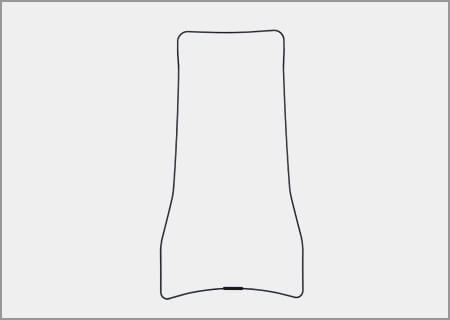
Broad term relating to an internal or external structure that carries and stabilizes a load. Not every pack has or needs a frame.
Internal Frame
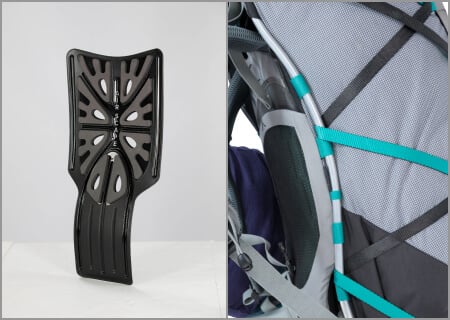
General term describing a load support structure inside a pack. Osprey’s internal support structures include either a peripheral frame, framesheet, or both.
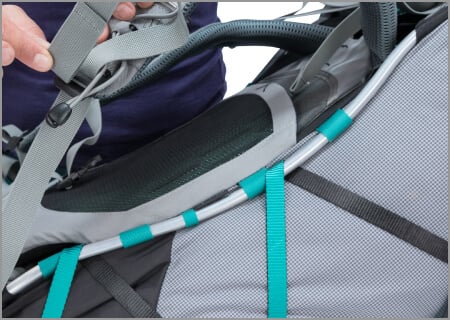
Peripheral Frame
An aluminum wire frame running the perimeter of the backpanel to connect the load lifters and pack core to the hipbelt. It allows natural movement while stabilizing the load and directing weight downward for a balanced carry. Osprey calls this technology LightWire.
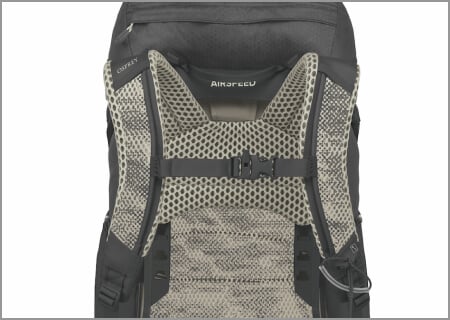
Harness
All backpacks have a harness; some designs are also referred to as shoulder straps. High-end technical harnesses often employ a full-yoke design, which uses a panel spanning across the shoulders to link the left and right shoulder straps for added structure and stability.
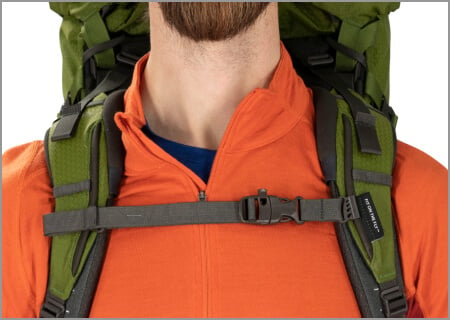
Sternum Strap
By connecting the left and right shoulder straps, a sternum strap improves load control and reduces pressure points—a small component with a big impact, found on many packs, but not all.
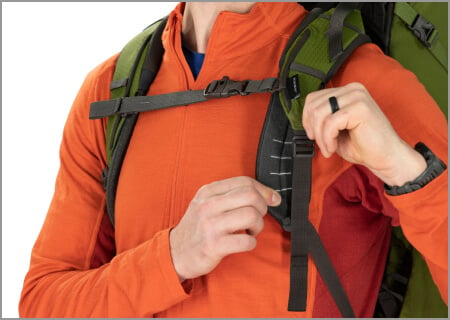
Fit-on-the-Fly™ Shoulder Strap
Osprey technology included on select packs, featuring extendable shoulder strap pads with angle adjustability to deliver a custom, tailored fit across a range of body shapes and sizes.

Load Lifters
These small adjustment straps run from the top of the shoulder straps to the upper part of the pack frame. Not all packs include load lifters. When present, they fine-tune the load position to improve balance, posture and load transfer to the hips.
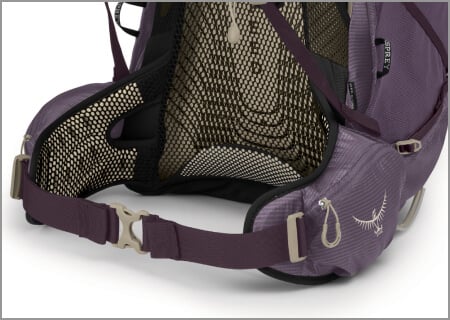
Hipbelt
Your hips carry weight far more efficiently than your shoulders. A properly fitted hipbelt transfers weight off the shoulders and onto the hips while stabilizing the load for better balance. Not every pack has a hipbelt, and designs vary based on intended use.
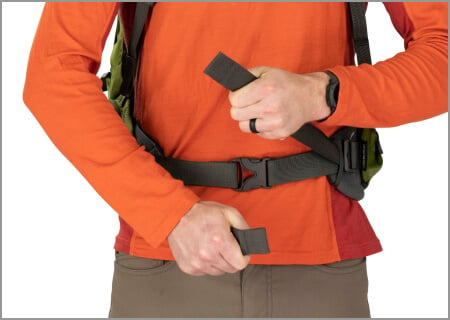
ErgoPull
A feature on select Osprey hipbelts that uses an inward, crossbody pull to secure the fit and optimize load transfer.
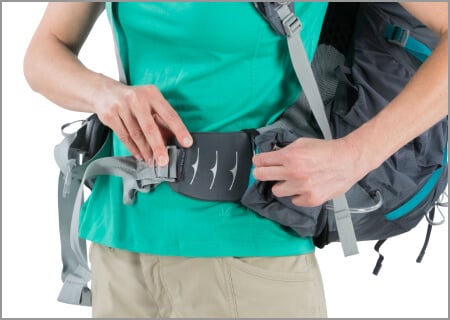
Fit-on-the-Fly™ Hipbelt
Osprey technology included on select packs, featuring adjustable hipbelt pads that can extend to deliver a precise, tailored fit across a range of waist sizes.
FAQ
A backpack suspension system is the framework that helps your pack carry weight comfortably and efficiently. It connects the shoulder straps, hipbelt and backpanel to stabilize the load and distribute pressure across stronger parts of your body. On long climbs, rocky descents or fast singletrack, a good suspension system keeps your pack from sagging or swaying so you can focus on the trail instead of your shoulders.
Most backpack suspension systems include a frame, shoulder straps, a hipbelt, a supportive backpanel, load lifter straps and a sternum strap for fine-tuning fit. The frame gives structure, while the hipbelt carries most of the weight and the backpanel offers comfort and airflow. Together, these pieces work as one system to keep your pack stable whether you're grinding uphill or moving fast over rolling terrain.
A well-designed suspension system uses a structured frame to channel the load downward into a padded, contoured hipbelt that wraps snugly around your hip bones. When adjusted correctly, the belt bears the majority of the weight, easing strain on your shoulders and upper back. This lets your core and leg muscles do the heavy lifting, which is exactly what you want on long miles deep in the backcountry.
Yes, Osprey's backpack suspension systems use ventilated backpanels, mesh materials, suspended frames or a combination of the three to encourage airflow and reduce sweat buildup during steep climbs or hot weather treks. Breathability will vary by pack style, but all systems are engineered to keep you cooler and more comfortable when the effort ramps up.
To adjust your suspension system, start by loosening all of the straps. Put the pack on and position the hipbelt so it sits securely over your hip bones, then tighten it first. Next, snug the shoulder straps until they contour comfortably without carrying most of the weight, and adjust the load lifters to bring the pack closer to your upper back. Finish with the sternum strap for added stability. Fine-tuning these points ensures the pack moves with you instead of against you.
A quality backpack suspension system improves comfort, balance and endurance. By shifting weight to your hips, it reduces shoulder fatigue, minimizes pressure points and keeps the load stable over uneven terrain. Whether you're thru-hiking or tackling steep alpine terrain, a strong suspension system helps you carry what you need without it slowing you down.
Video player
Cargando...
Mi cesta
Your Cart ()
No tienes ningún artículo en tu carrito.
You may also like
Subtotal:
Subtotal after discount:
Cargando...