
Search is currently unavailable. To use search functionality, please accept cookies in your preferences.
The Five Stages of a (Female) Solo Hike
A journey through anticipation, determination, vulnerability, belonging, and fulfillment.
5 min lire
Feb 10, 2026

There’s something unforgettable about landing in a new country completely on your own. The air smells different, the rhythm of the streets feels unfamiliar, and suddenly every choice—every turn, every meal, every conversation—is yours to make. It can be intimidating, sure. Sometimes uncomfortable. But I’ve found those are the moments worth leaning into: the ones that reveal who you are when it’s just you and your instincts.
Solo travel has shaped who I am more than almost anything else. It’s taught me to trust myself, to stay open, and to build a sense of home wherever I go. And yet, despite countless trips on my own, I still get the same question whenever I share my plans: “But… you’re going alone?”
This question is usually asked with kind concern, but laced with that familiar undertone of worry.
While I’m sure many solo travellers have received this question upon sharing their travel plans, it usually lands differently for women. There’s a quiet assumption that being alone makes us vulnerable—that solitude is something to fear rather than something to claim. But for me, being on my own has always felt like strength.

And nowhere is that more true than on the trail.
The Grand Tour des Combins
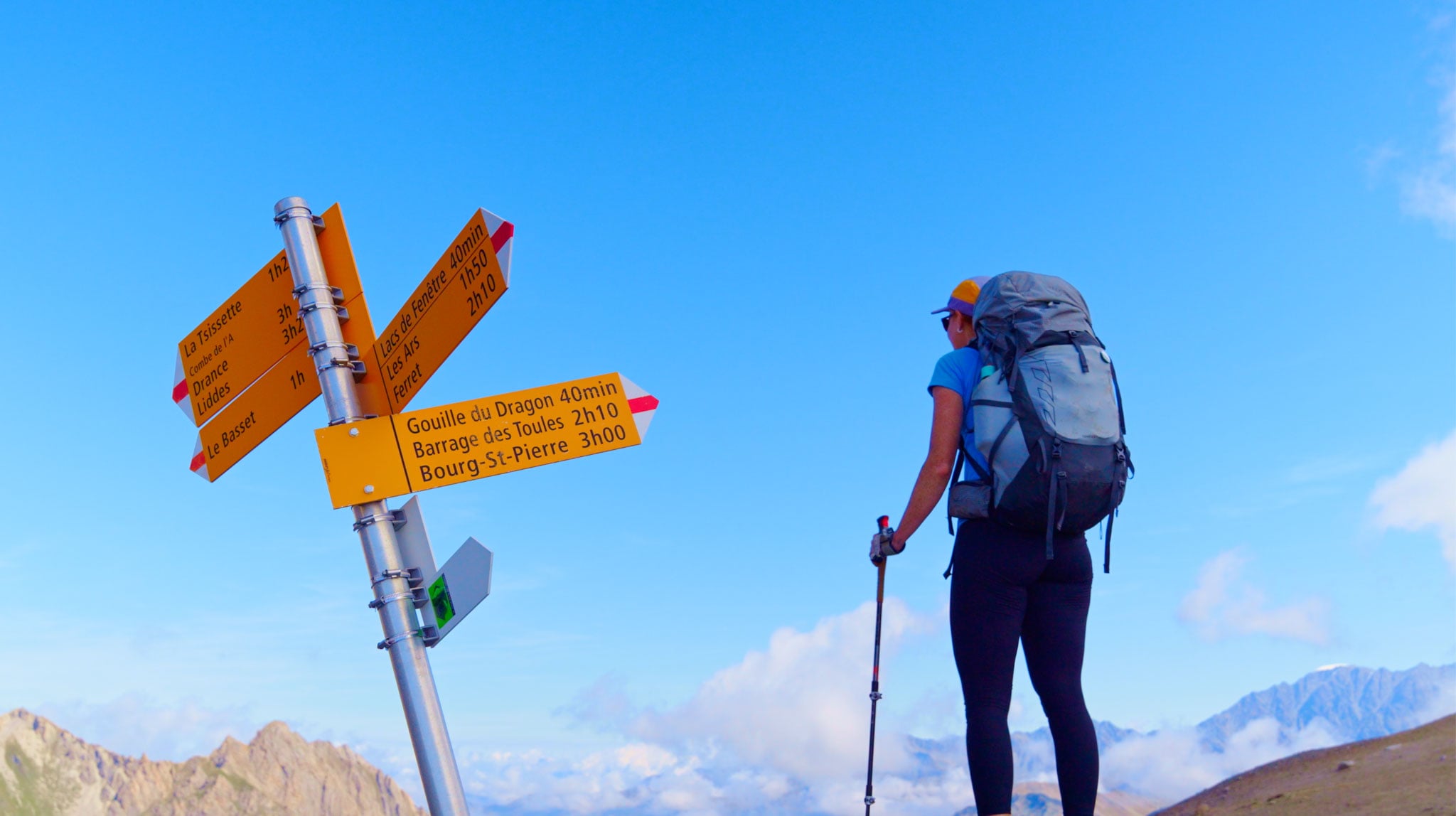
That’s what led me to the Grand Tour des Combins (GTDC)—a rugged alpine loop tucked between Switzerland and Italy. I was drawn to a landscape both demanding and beautiful, where solitude takes on its own unmistakable tone beneath the Alps.
The GTDC is a lesser-known circuit in the Alps, tracing roughly 105 kilometres around the massive Grand Combin on the Swiss–Italian border. Over the course of nine days, I travelled along trails that traversed high mountain passes, quiet valleys, and through small alpine villages that felt frozen in time. Compared to the nearby Tour du Mont Blanc, it’s quieter—less polished, more rugged.
Each day on the trail felt like its own small story. Mornings began with the soft clang of cowbells echoing through mist, the scent of espresso drifting from the refuge kitchen, and the shuffle of boots on gravel as hikers set off for the day. The climbs were long and steady, weaving through wildflower meadows before giving way to scree and exposed passes. Afternoons stretched into descents through pine forest and past glacier-fed rivers so clear they seemed lit from within.

At night, the refuges were occupied with hikers from all over the world. Voices in half a dozen languages filled the dining rooms as bowls of pasta and bottles of red wine were shared. Most hikers travelled in pairs or groups, and every now and then, another solo woman would slip into a seat across the room.
We always found each other. Not out of necessity, but out of recognition. A kind of unspoken nod: You’re carving out space too.
Reflections on a Solo Female Hike
Solo hiking as a woman comes with its own rhythm—a balance between awareness and freedom, caution and boldness, softness and resolve. There’s the familiar hum of vigilance we’re taught to carry, even in the quietest valleys. But with every step, that hum softened. My confidence grew louder than my worry. My pace became my own. And the more miles I covered, the more those shifts began to define the entire experience.
For me, solo hiking isn’t about proving strength in the traditional sense. It’s about moving through the uncertainty, finding pride in the effort, and reaching that quiet moment of calm when you recognize you’re exactly where you’re meant to be. On the Grand Tour des Combins, I found all of it—the beauty, the discomfort, the stillness, and the undeniable sense of power that comes from knowing you can carry yourself through it all.

That emotional landscape became the heart of my film, The Five Stages of a (Female) Solo Hike. It follows my journey through anticipation, determination, vulnerability, belonging, and fulfillment.
Watch the Film(S'ouvre dans une nouvelle fenêtre)
En cours de chargement...
Your Cart ()
Votre panier est vide.
You may also like
Sous-total :
Subtotal after discount:
En cours de chargement...